How to Choose a Reliable Blast Furnace Vent Valve Manufacturer?
Understanding Blast Furnace Vent Valves and Their Importance
- Understanding Blast Furnace Vent Valves and Their Importance
- Defining Your Procurement Needs and Selection Criteria
- Comparing Top Blast Furnace Vent Valve Manufacturers
- Practical Guide to Procurement and Installation
- Building Long-term Partnership with Your Manufacturer
- Conclusion
- FAQ
- Partner with SMEC for Superior Blast Furnace Vent Valve Solutions
- References
A dependable blast furnace vent valve manufacturer must have technical expertise, quality assurance procedures, and long-term service commitment. The ideal partner should have high-temperature valve technical experience, strict quality control processes aligned with ASME B16.34 and API 598, and complete after-sales service. Beyond pricing, evaluate production infrastructure, customization flexibility, and supplier metallurgical experience. Certifications, client reviews, and open communication indicate reliability. A reliable manufacturer will understand your operating pressures, provide customized solutions, and support your facility's safety and productivity goals throughout the equipment lifespan.
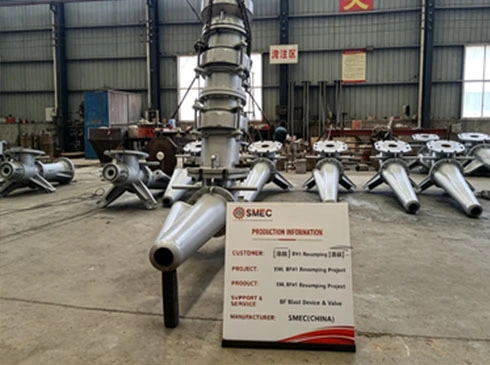
Understanding Blast Furnace Vent Valves and Their Importance
Why These Valves Matter in Ironmaking Operations?
Every blast furnace operation needs precise pressure management to avoid catastrophic failures and preserve productivity. Your blast furnace vent valve protects your system by quickly discharging surplus gases during charging cycles and emergency surges. Rapid gas displacement from raw materials entering the furnace throat can harm refractory linings, structural integrity, and workers without proper venting. These valves release hazardous high-temperature gases containing CO and particles into scrubbing systems instead of permitting uncontrolled emissions. Reliability is essential since valve failure costs integrated steel plants thousands per hour.
Core Technical Parameters That Define Performance
The main selection criterion is temperature resistance. Standard blast furnace vent valves work from 250°C to 450°C, while hot blast stoves require 1000°C models. The valve must react promptly to pressure changes during blower trips or power outages despite working pressures of 0.2 to 0.45 MPa. Choosing heat-resistant Cr-Mo alloy steels for the body and hard-facing sealing surfaces with Stellite or Tungsten Carbide for HRC 50-55 hardness affects lifetime. This prevents erosion from blast furnace gas with high-velocity coke breeze. API 598 requires Class V or VI leakage criteria for sealing integrity to prevent emissions from abrasive particles challenging the seat.
Compliance and Safety Standards You Cannot Ignore
Regulatory compliance safeguards assets and workers. Reliable manufacturers create valves using ASME B16.34 pressure-temperature ratings, API 598 valve inspection and testing, and ISO 9001 quality management systems. These are technical practices tested over thousands of installations, not bureaucratic criteria. Ultrasonic and radiographic examination should be standard to detect interior casting problems before installation. High-temperature cycle testing accelerates years of thermal stress, revealing actuator mechanism or sealing geometry shortcomings. Material traceability and chemical composition reports show transparency and responsibility from manufacturers.
Defining Your Procurement Needs and Selection Criteria
Matching Valve Specifications to Your Operational Profile
Different facilities need different venting. Blast furnace coking facilities may need many smaller-capacity blast furnace vent valves throughout gas collecting networks, whereas integrated steel mills need larger-bore valves to handle tremendous volumetric flows during charging. Peak flow, ambient dust concentrations, and cycle frequency affect wear patterns—a valve switching 20 times per day wears differently than one working twice each shift. Options for customization matter much. Can the manufacturer modify actuator size for pneumatic or hydraulic pressures? Does the company sell water-cooling jackets for high temperatures? Flexible flange ratings, stem extensions, and material upgrades distinguish responsive partners from catalog vendors.
Essential Evaluation Metrics for Manufacturer Assessment
Quality control shows production discipline. Request inspection procedures: Does the supplier test seat leakage with air or nitrogen per DIN EN 12266? How are hard-facing hardness and depth verified? Alloy chemistry spectroscopy should validate Cr/Ni concentration. Modern CNC machining machines, automated welding stations, and climate-controlled assembly spaces generate finer tolerances than older facilities. Manufacturers who quote 8-12 weeks for typical setups vs 20+ weeks demonstrate organizational efficiency. When urgent troubleshooting occurs, spare parts, field service, and technical hotlines are essential.
Verifying Credentials Through Documentation and References
Certifications give baseline assurance, but customer references demonstrate real-world value. Ask manufacturers for case studies from coking plants, steel mills, or metallurgical plants with similar operating circumstances. Ask these references about valve performance, failure rates, and manufacturer responsiveness throughout commissioning and warranty. Classification society or industry association audits lend credibility. R&D relationships with universities or dedicated research institutions show manufacturers' innovation commitment beyond order fulfillment. This is important when emission or efficiency rules necessitate performance improvements years after purchase.
Comparing Top Blast Furnace Vent Valve Manufacturers
Brand Reputation and Innovation Leadership
Newer metallurgical equipment producers lack the experience of decades-old firms. Their engineers use failure modes from thousands of installations to enhance future generations of the blast furnace vent valve. Legacy doesn't ensure relevance—consider recent product advances. Have they implemented leak-reducing sealing technologies? Are designs equipped with stem position sensors or acoustic emission detection? Some manufacturers use smart actuators to feed plant control systems real-time performance data for predictive maintenance. Innovative solutions should reduce maintenance, increase chair life in dusty settings, or speed emergency venting response.
Global Reach Versus Localized Support
How international presence affects your project varies. Regional offices, accredited service centers, and parts depots allow multinational vendors to respond quickly across continents. EPC companies managing many projects or operators of widely distributed facilities standardizing equipment advantages. Concentrated producers in industrial centers like Shanxi Province often offer better value through specialization. Efficiency benefits from proximity to raw material sources, integrated supply chains, and coking and metallurgical knowledge. Can they provide timely help to your location? Assess shipment logistics, customs experience, and collaborations with local distributors for installation oversight and emergency parts.

Material Quality and Design Sophistication
Different high-temperature alloys for blast furnace vent valve operate differently. Superior valve bodies use vacuum-cast Cr-Mo steels with optimized grain structure to withstand thermal fatigue cracking. Laser cladding and plasma-transferred arc hard-facing effect bond strength and coating uniformity. Floating seats or dual-seal systems guard against thermal expansion in advanced designs. Water-cooled bonnets operate under ultra-high temperatures without actuator failure. These upgrades are expensive but greatly increase service life. Calculate total cost of ownership: an initially expensive valve operating 5-7 years maintenance-free outperforms cheaper alternatives requiring annual rebuilds, especially considering production interruptions during maintenance outages.
Practical Guide to Procurement and Installation
Structuring Effective Technical Inquiries
Complete specs start procurement efficiency. Specify temperature, pressure, gas composition, particle loading, and yearly cycle frequency for the blast furnace vent valve. Choose ANSI/ASME or DIN flanges, a pneumatic, hydraulic, or electric actuator, and any space limits that impact valve orientation or stem extension. Site ambient conditions—extreme cold, corrosive atmospheres, or seismic needs affect material and structural reinforcement. Ask for datasheets, GA drawings, and material test results with quotes. Define FOB, CIF, or DDP delivery and payment arrangements. Ask about factory acceptance testing for large orders so your engineers can see performance before shipment.
Managing Logistics and Quality Verification
Logistics coordination is essential for international buying. Set delivery milestones with penalties for project delays. Request packing lists, shipping documents, and handling directions from manufacturers—improper transit might harm precise sealing surfaces. Check measurements against drawings, flange facing quality, and hard-facing for cracks or porosity upon shipment before installation. Plant air pre-installation function testing verifies actuator functionality and seating. Many fatal early failures are installation mistakes, not manufacturing faults. Demand manufacturer-supervised installation or thorough commissioning procedures encompassing torque parameters, alignment tolerances, and first adjustment processes.
Maintenance Strategies Maximizing Operational Life
Proactive maintenance for blast furnace vent valve prevents crises. Check actuator reaction times, supply pressure, and stem packing monthly. Schedule leakage testing during planned outages to assess sealing performance. Thermal imaging detects aberrant heat patterns indicating internal degradation or refractory failure. Major inspections every 12-18 months should involve disassembly, sealing surface dimensions verification, and hard-facing thickness assessment. Increased actuation force, longer stroke times, visible gas leakage, or abnormal vibration during operation are failure symptoms. Stock essential supplies including stem packing sets, actuator rebuild kits, and complete sealing assemblies. Worn valves can be repaired for a fraction of the cost of replacement by refurbishing manufacturers.
Building Long-term Partnership with Your Manufacturer
Technical Support That Extends Beyond Installation
Manufacturers should form strategic partnerships. Leading vendors offer continuing technical consulting as your operating profile changes—process modifications, capacity expansions, and emission regulatory compliance may need blast furnace vent valve performance adjustments. Find manufacturers that conduct periodic performance evaluations to provide optimization techniques based on maintenance records and failure trends. Maintenance personnel get troubleshooting, disassembly, and adjustment training to reduce repair calls. Devoted account managers, 24/7 technical hotlines, and quick engineering assistance distinguish transactional suppliers from collaborative partners devoted in your success.
Warranty Terms and Risk Mitigation
Complete warranty coverage shows manufacturer confidence. Material and workmanship problems should be covered for 12-18 months after commissioning. Consider exclusions—does using non-OEM replacement parts or modifying designs without approval nullify coverage? Learn claim procedures: Who decides failure cause? What documentation is needed? Will new parts arrive quickly? Progressive manufacturers provide longer warranties or performance assurances based on operational indicators like cycle counts or leakage rates. Clearly defined defective product return rules, including freight and taxes, prevent disagreements. These contractual parameters greatly affect overall risk exposure in high-stakes metallurgical contexts when valve failure stops output.
Collaboration on Continuous Improvement
Your operating experience informs future designs. Field data-driven manufacturers who collaborate on solutions show partnership spirit. If your facility's gas chemistry promotes erosion, may the manufacturer attempt different hard-facing alloys? Mounting restrictions may need specialized actuation. Collaboration allows quick prototype and field testing of inventions that benefit both sides. Manufacturers that incorporate client feedback into R&D roadmaps meet industry needs as pollution rules tighten and automation demands rise. This continuing interaction establishes confidence and gives you a competitive edge with custom equipment for your applications.
Conclusion
Beyond price, choosing a trustworthy blast furnace vent valve manufacturer requires extensive assessment. The foundation is high-temperature valve engineering experience, strict quality processes proven by international certifications, and metallurgical application expertise. Determine production, customization, and worldwide logistics capability for your project. Client references and third-party validations ensure claims survive operations. Prioritize providers with extensive technical support, clear warranty conditions, and continual improvement collaboration. This strategic approach gives your facility a trusted partner that provides safe, dependable pressure management systems that safeguard staff, maximize uptime, and respond to changing operating needs.
FAQ
How Do Operating Temperatures Affect Valve Selection?
Operating temperatures affect blast furnace vent valve selection. Standard heat-resistant alloy vent valves can withstand 450°C. Water-cooling jackets or ceramic insulation avoid actuator heat damage in applications around 1000°C, such as hot blast stove venting. Nickel-rich alloys resist oxidation and creep at high temperatures. Check the manufacturer's temperature rating for safety margin beyond your maximum operating condition to accommodate for process upsets or furnace throat hot spots.
What Causes Premature Valve Failures in Furnace Applications?
Most failures involve sealing surface deterioration from high-velocity particulate gases. Insufficient hard-facing thickness or alloy choice promotes wear. Thermal fatigue from regular temperature cycling can shatter valve bodies if material specs don't meet application severity. Heat migration across valve stems degrades seals and lubricants, causing actuator failures. Regular hard-facing examination and heat shielding installation improve service life. In emergency operations, vertical placement reduces actuator chamber dust and mechanical binding.
Can Existing Valves Be Upgraded to Meet Stricter Emission Standards?
Many valves may be upgraded without replacement. Retrofitting stricter leakage classification sealing systems during large overhauls is possible. Quicker pneumatic actuators enhance emergency venting. Some manufacturers provide control system integration solutions for older valves with position feedback and diagnostic monitoring. However, basic limits require replacement if body materials lack temperature resistance or pressure ratings. Ask your manufacturer's technical staff about upgrade feasibility and lifespan costs of contemporary replacement equipment with latest pollution control technology.
Partner with SMEC for Superior Blast Furnace Vent Valve Solutions
SMEC's blast furnace vent valve systems are designed for tough industrial conditions using over 30 years of metallurgical equipment knowledge and cutting-edge research. Our 23,000-square-meter sophisticated production plant in Taiyuan, China's energy and heavy industry hub, has precision machining facilities and stringent testing labs to ensure every valve satisfies ASME and API requirements. Our 168 engineers, including 30 senior engineers, create solutions for operating issues including ultra-high temperature resistance and automated monitoring integration. We provide installation help, maintenance training, and fast after-sales service. Contact our team at project@smec.cc to explore how SMEC's innovation and manufacturing expertise may improve your facility's safety and productivity as a supplier supporting worldwide operations with dependable, certified products.
References
American Society of Mechanical Engineers. (2020). ASME B16.34: Valves—Flanged, Threaded, and Welding End. New York: ASME Press.
American Petroleum Institute. (2019). API Standard 598: Valve Inspection and Testing. Washington, DC: API Publishing Services.
Zhang, L., & Chen, W. (2021). High-Temperature Valve Materials for Metallurgical Applications. Journal of Materials Engineering and Performance, 30(8), 5842-5856.
International Organization for Standardization. (2018). ISO 9001:2015 Quality Management Systems—Requirements. Geneva: ISO Central Secretariat.
Kumar, R., & Patel, S. (2022). Pressure Management Systems in Modern Blast Furnace Operations. Ironmaking & Steelmaking: Processes, Products and Applications, 49(3), 312-327.
Müller, H., & Schmidt, T. (2020). Hard-Facing Technologies for Erosion Resistance in Industrial Valves. Welding Journal, 99(6), 187-201.
Free consultation & volume discounts available
SEMC focuses on the entire metallurgical process—from coking, ironmaking, and steelmaking to continuous casting and rolling. Whether you face challenges related to equipment upgrades, energy efficiency optimization, or overall process transformation, please fill in the following information. Our technical team will provide you with tailor-made high-end equipment upgrade solutions and professional EPC design services to help your project be implemented efficiently.
Recommended Blog

How to Improve the Efficiency of Slag Granulation Equipment

Why Steel Plants Prefer Custom Blast Furnace Tuyere Equipment?

Comparing Different Types of Blast Furnace Tuyere Equipment

How Does a Three-Ring Cone Scrubber Work in Blast Furnace Gas Cleaning?


Installation Process for Blast Furnace Cast Iron Cooling Walls

How to Choose a Blast Furnace Drill Rod Replacement Device Supplier?

How Three-Ring Cone Scrubbers Improve Blast Furnace Gas Quality

