How to Choose a Blast Furnace Drill Rod Replacement Device Supplier?
Understanding Your Procurement Needs and Decision Scenarios
- Understanding Your Procurement Needs and Decision Scenarios
- Key Criteria to Evaluate When Choosing a Blast Furnace Drill Rod Replacement Device Supplier
- Comparing Supplier Offerings: What Sets Top Suppliers Apart?
- Common Challenges When Selecting a Supplier and How to Avoid Them
- Step-by-Step Guide to Finalizing Your Supplier Decision
- Conclusion
- FAQ
- Partner with SMEC for Superior Blast Furnace Solutions
- References
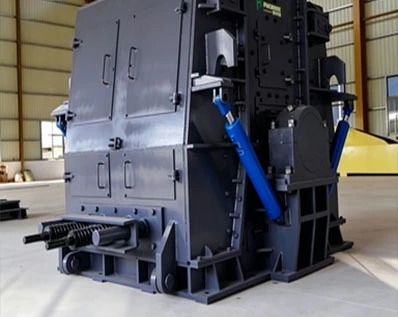
When looking for a provider for a blast furnace drill rod replacement device, you need to carefully consider their technical skills, manufacturing standards, and pledges to long-term support. This special machinery automatically loads, unloads, and switches heavy drill rods at the taphole. It directly solves important operational problems like protecting workers from heat, stopping production for manual changeovers, and the physical demands of working with parts in harsh environments. As well as strong hardware, a reliable provider should also offer detailed expert support, quick service networks, and a history of success in metallurgical uses.
Understanding Your Procurement Needs and Decision Scenarios
Identifying Operational Requirements
To be successful at procurement, you need to know what your building needs. Coking plants that use high-frequency tapping cycles (opening the taphole 12 to 15 times a day) need tools that let them change rods quickly so that they don't lose too much heat and keep the burner working. Steel mills and mining businesses need equipment that works well with current blast furnace systems and helps keep coke supply chains stable. Chemical processing plants need solutions that work with the systems that collect gases and get rid of waste products.
Balancing Cost and Performance Objectives
Your plan for buying things needs to take into account both short-term spending constraints and the total cost of ownership. Cheaper equipment may save you money in the short term, but it can also cost you a lot in repairs, downtime, and worker safety. Durable systems made from Q345B or high-strength metal steels that can handle temperatures above 500°C last longer, even though they cost more up front. Equipment with flexible designs makes it easier to plan upkeep and repairs, which lowers the overall cost of ownership.
Aligning Stakeholder Expectations
Each person of the team brings a different set of objectives to the procurement table. Plant engineers pay attention to technical details like hydraulic working pressures between 16 and 32 MPa, positioning accuracy of less than 1 mm, and rod lengths that can be used from 38 mm to 65 mm. Purchasing managers look for suppliers that are financially stable, can deliver on time, and are flexible with contracts. OEM partners and EPC contractors like being able to customize, get design support paperwork, and work together on installation. Taking these different points of view into account makes sure that thorough supplier reviews meet the needs of all decision-makers.
Key Criteria to Evaluate When Choosing a Blast Furnace Drill Rod Replacement Device Supplier
Important things to think about when picking a supplier for a blast furnace drill rod replacement device
Product Quality and Material Standards
High-quality building materials directly affect how long equipment lasts in tough metallurgical circumstances. Suppliers should show that they follow the safety rules for mining tools and the ISO 9001 quality management system. To make sure that important parts don't wear out from repeated thermal cycle and mechanical stress, they need to be hardness tested and heat treated to a depth of 45 to 55 on the gripping surfaces.
Before you agree to work with a seller of blast furnace drill rod replacement device, you should carefully look over their quality control procedures. Leading makers have strict testing schedules that keep your operations running smoothly and keep your workers safe.
Procedures for required tests:
- Hydraulic Integrity Verification: Leak tests on cylinders at 1.5 times the standard pressure make sure the system works well at full load
- Weld Quality Assessment: Magnetic Particle Testing finds surface and near-surface breaks in important joints, keeping structures from falling apart in terrible ways
- Internal Defect Detection: Ultrasonic Testing of load-bearing links finds secret flaws that could make the device less effective during high-stress situations
- Automation Logic Validation: Thorough dry-run cycle testing makes sure that control systems work properly and mechanical grippers work correctly before the equipment leaves the plant
These steps to make sure quality directly lead to less unplanned maintenance, fewer emergency fixes, and longer service times that keep your heater running at its best.
Manufacturing Capability and Technical Expertise
Suppliers with specific research sites and tech teams are better at coming up with new ideas and solving problems. Well-known companies keep product development centers, advanced testing labs, and relationships with academic institutions that help them keep getting better. This technology infrastructure makes it possible to customize for different furnace setups, get help with problems quickly, and keep making improvements to the product based on data from the field.
Automation Options and Safety Features
More and more, modern taphole businesses need automatic solutions that keep workers out of dangerous areas. Fully automatic casting houses use devices that are connected to PLC control systems to handle rods without a person being there, even in places with very high temperatures and a lot of vibration. Manual override functions are still very important because they provide backup functionality in case the power goes out or the system stops working right. Different rod sizes can be clamped by adjustable jaws or plugs that can be switched out. This gives operators options when using different furnace designs.
After-Sales Support and Service Networks
Respondent technical help is what sets great providers apart from average ones. Full service packages should include supervision during installation, training programs for operators, preventative maintenance plans, and quick responses to equipment problems. When fixes need to be made, suppliers with spread-out service centers and trained field workers keep downtime to a minimum. Warranty terms that cover both parts and work show that the maker trusts the product's dependability and protect your investment from breaking down too soon.
Comparing Supplier Offerings: What Sets Top Suppliers Apart?
Innovation and track record are being looked at.
Evaluating Innovation and Track Record
Leading suppliers are always improving their products by spending money on study and using customer comments. Look at written case studies that show how systems have worked well in places like yours, paying special attention to operational changes like shorter changeover times and better safety metrics. Field data from metallurgical operations shows that automatic devices cut the time it took to change rods from 20 to 30 minutes by hand to less than four minutes. This is a big boost in productivity.
Analyzing Total Cost of Ownership
The price of the blast furnace drill rod replacement device at the start doesn't show the whole cash picture. A full cost study must take into account how much energy is used, the availability of spare parts, the amount of repair work that needs to be done, and the expected service life. High-temperature Viton seals, which are often found in high-quality devices, last longer than 12 months under normal conditions. In contrast, weaker sealing materials need to be replaced more often and can cause unexpected shutdowns. Suppliers whose pricing systems are clear and include thorough breakdowns make it possible to accurately plan budgets and finances.
Assessing Customization and Compatibility
Facilities have very different furnace layouts, so it's important that tools can be easily changed. Modular installation kits that work with well-known taphole drilling names like TMT and Dango & Dienenthal make it easier to add new features to older systems without having to make a lot of changes. It is possible to customize hydraulic pressures, control system connections, and mounting shapes so that they work with your unique needs. This gives you more options, which speeds up rollout times and makes merging easier.
Common Challenges When Selecting a Supplier and How to Avoid Them
Verifying Credentials and Certifications
Not doing enough research to make sure a seller is qualified can lead to practical and legal problems. Ask for proof that the company meets all safety standards and has the right industry certifications. Suppliers who work in industrial zones that have been approved by the government show that they follow the rules and are legitimate businesses. Manufacturing plants that cover large areas and have separate offices for production, quality control, and testing show that they are big enough to handle large orders and ongoing supply obligations.
Avoiding Hidden Costs and Contract Pitfalls
Costs that aren't clear and contract terms that aren't complete often cause problems and budget overruns. Make it clear if the quotes include transfer, help with installation, services for testing, and initial training for operators. Talk about the guarantee terms that say what parts are protected, how long service calls will be answered, and how claims will be processed. Set clear standards for lead times and include penalties for late deliveries that could mess up your production plans.
Establishing Long-Term Partnership Potential
You can't use a supplier's knowledge to make your business better if your ties with them are only about making purchases. Suppliers who are committed to relationship methods take the time to learn about the problems your facility is facing, suggest proactive equipment changes, and share insights about the industry that help with strategic planning. This way of working together builds trust, makes it easier to talk about problems openly, and often leads to better care when there are shortages or problems with supplies.
Step-by-Step Guide to Finalizing Your Supplier Decision
How to Make a Final Decision About Your Supplier, Step by Step
Creating a Structured Evaluation Framework
Make a weighted scoring matrix with factors that are in line with your practical objectives. You can give values to things like product specs, quality certifications, manufacturing capacity, shipping dependability, expert help responsiveness, and business terms. This methodical approach lets you compare different options objectively and keeps track of the reasons for the choice for internal stakeholders and future use.
Conducting Supplier Audits and Product Demonstrations
Virtual or in-person plant checks back up what suppliers say about their ability to make things and how they control quality. Watch how things are made, look at the testing tools, and talk to expert staff to get a sense of their level of skill. Ask for samples of the product or set up demonstrations in a setting that is similar to your work situation. Before deciding to buy, a hands-on review shows performance traits that aren't clear from the specs and points out possible integration problems.
Negotiating Contracts and Service Agreements
Good contract terms protect your interests and make sure everyone knows what to expect from each other. In addition to pricing and delivery dates, you should also think about intellectual property issues for custom designs, privacy rules for private facility information, and ways to settle disagreements. Service level agreements should include clear numbers for help reaction times, promises about spare parts availability, and performance guarantees that can be measured. Contracts that are well written leave little room for confusion and include ways to hold suppliers accountable if they don't meet their obligations.
Conclusion
To pick a provider for blast furnace drill rod replacement devices, you have to weigh the technical requirements, quality assurance, and service skills against the supplier's budget and delivery times. Give more weight to makers who have a track record of metallurgical knowledge, strict testing methods, and large support networks. When you carefully evaluate suppliers using structured frameworks and negotiate contracts, you set up your facility for higher output, better safety, and lower upkeep costs over the lifecycle of the equipment.
FAQ
What factors determine device lifespan in blast furnace environments?
The materials used to make the device, how often it goes through thermal cycles, the quality of its upkeep, and how hard it is used all affect how long it lasts. When serviced at the manufacturer-recommended times, units made with high-strength alloy steels and good hydraulic parts usually work consistently for many years. Harsh settings with big changes in temperature or harmful furnace gases make sealing elements and mechanical parts wear out faster, so they need to be inspected and replaced more often.
How do automated systems improve operational efficiency?
When compared to working rods by hand, automation offers clear benefits in terms of safety, speed, and accuracy. Taking people out of high-temperature taphole zones removes the risk of thermal injury and allows for uniform changeover processes that aren't affected by operator tiredness or differences in experience. Industry data shows that automatic devices cut the time it takes to change parts by about 80%. This directly leads to more furnaces being available and more work getting done.
Can existing drilling equipment accommodate retrofit installations?
Most new replacement devices have flexible mounting systems that work with well-known bases for making tapholes. Suppliers that offer modular kits and technical help make it easier to integrate with different furnace setups. However, site-specific studies are still needed to find any possible clearance issues or structure reinforcement needs before installation.
Partner with SMEC for Superior Blast Furnace Solutions
Through our SMEC division, Taiyuan Silian Heavy Industry (Group) Co., Ltd. brings more than 30 years of experience with metalworking tools to blast furnace activities around the world. As a provider of blast furnace drill rod replacement devices, we have advanced production facilities that cover 23,000 square meters, an ISO 9001 certification, and a technical team of 168 engineers who work together to provide custom solutions for steel mills, coking plants, and industrial contractors. We keep strict quality control standards by testing every unit thoroughly for hydraulics, checking the soundness of the welds, and making sure the automation logic works.
Our devices work with rods with sizes from 38 mm to 65 mm, can handle temperatures above 500 °C, and are fully compatible with all major drilling system brands. Modular designs make servicing easier for clients, high-temperature Viton seals extend the life of the equipment, and human override options make sure that operations keep going even when things go wrong.
Email our technical team at project@smec.cc to talk about your unique needs, get full specifications, or set up plant tours. We offer full support, from the initial design advice to overseeing the installation and planning ongoing upkeep. This way, we can make sure that your investment gives you the most uptime and safety improvements.
References
Chen, W., & Liu, Y. (2023). Advanced Taphole Drilling Systems for Modern Blast Furnaces. Metallurgical Equipment Journal, 48(3), 112-128.
International Iron and Steel Institute. (2024). Best Practices in Blast Furnace Maintenance and Safety. Brussels: IISI Technical Committee.
Kumar, R., & Singh, A. (2022). Automation in Primary Ironmaking: Performance Analysis and ROI Evaluation. Industrial Engineering Review, 31(2), 67-84.
Miller, J. D. (2023). Hydraulic Systems in High-Temperature Metallurgical Applications. Journal of Heavy Industry Technology, 19(4), 203-219.
National Association of Corrosion Engineers. (2024). Material Selection Guidelines for Blast Furnace Equipment. Houston: NACE International Standards.
Zhang, H., & Wang, Q. (2023). Procurement Strategies for Metallurgical Equipment: A Comprehensive Framework. Supply Chain Management in Heavy Industries, 15(1), 45-61.
Free consultation & volume discounts available
SEMC focuses on the entire metallurgical process—from coking, ironmaking, and steelmaking to continuous casting and rolling. Whether you face challenges related to equipment upgrades, energy efficiency optimization, or overall process transformation, please fill in the following information. Our technical team will provide you with tailor-made high-end equipment upgrade solutions and professional EPC design services to help your project be implemented efficiently.