Wet vs Dry Slag Granulation: Which Technology Is Better?
Understanding Wet and Dry Slag Granulation Technologies
- Understanding Wet and Dry Slag Granulation Technologies
- Evaluating Performance: Advantages and Limitations of Wet vs Dry Granulation
- Selecting the Right Blast Furnace Slag Granulation Equipment for Your Operation
- Maintenance and Operational Tips for Optimal Equipment Performance
- Real-World Applications and Case Studies
- Conclusion
- FAQ
- Partner with SMEC for Advanced Slag Processing Solutions
- References
Whether you use wet or dry slag granulation relies on your equipment and operational goals. Modern blast furnace slag granulation equipment that uses wet methods has faster cooling rates and a glass content of more than 95%, which makes it perfect for making cement-grade GGBFS. Dry granulation works great in places with little water because it makes operations simpler and makes managing wastewater easier. Neither technology is always better than the other. The best choice depends on your plant's access to energy, its need to meet environmental standards, its production volume goals, and the specs of the products it will make later. Steel mills and coking plants can choose tools that will help them meet their long-term goals for success and sustainability if they understand these technical and economic trade-offs.
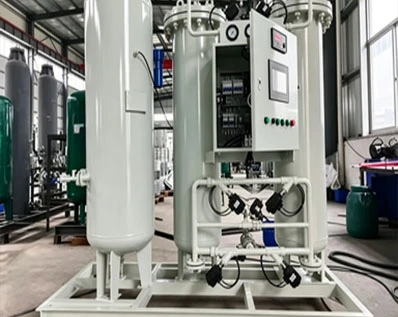
Understanding Wet and Dry Slag Granulation Technologies
What Defines Wet Granulation Systems?
Wet granulation is the usual way to turn molten blast furnace slag into glassy granules in the business. High-pressure water jets quickly cool down slag that comes out of the furnace at temperatures between 1450°C and 1550°C. This lightning-fast cooling (in seconds) stops calcium silicates and aluminum oxides from crystallizing, keeping the flexible structure that is needed for hydraulic response. A trough system, a granulation pit, and a dewatering device are common pieces of equipment. To lower the end moisture content below 15%, spinning drum screens or INBA systems are often used.
The water-to-slag ratio stays under tight control and can be anywhere from 1:8 to 1:12, based on the slag's chemistry and the goal particle size distribution. This method makes angular granules that are between 0.5 mm and 5 mm thick and meet the requirements of ASTM C989 for ground powdered blast furnace slag that is used in marine-grade concrete and sulfate-resistant cement mixes.
How Dry Granulation Differs Mechanically?
Through mechanical atomization or air-cooled rotating drum devices, dry granulation gets rid of the need for water. When molten slag runs onto a disc or drum that spins very quickly, centrifugal force breaks the material up into small drops. These drops harden in midair when they come into contact with ambient air or controlled-atmosphere cooling. This makes circular particles. Since there is no touch with water, the process plan is simpler, and there is no need for equipment for steam condensation.
The forms of the particles are very different. Granules made with dry ways are rounder and smoother, while granules made with wet quenching are more angular. The glass content is usually between 85 and 92%, which is a little lower than in wet systems but still enough for many bulk uses. Exhaust gas heat exchanges can recover energy, which can help cover some of the costs of running a business. Even though it costs more to buy the tools at first, plants in dry areas or those that want to use less water are increasingly favoring this method.
Key Equipment Components Across Both Technologies
Receiving troughs with refractory linings rated for exposure to 1500°C or more, automatic flow control gates, and dust reduction hoods are some of the basic parts that both systems share. Wet systems are more complicated because they have chemical scrubbers for getting rid of H2S, water recycling circuits, and drainage ponds. Granulation heads, also called nozzle manifolds, are places where a lot of wear happens. They are usually made of chromium-molybdenum alloys to protect them from the slag's rough silicate makeup.
Modern setups use PLCs to automatically check things like the flow rate of slag, the steadiness of the water pressure, and the temperature of the granules after they have been quenched. Variable frequency drives change the mechanical speeds in response to changes in the viscosity of the slag. This keeps the quality of the output stable even when the furnace tapping changes. Real-time X-ray diffraction analysis is done in quality assurance labs to check the content of the glass phase before the material is sent to storage bins.
Evaluating Performance: Advantages and Limitations of Wet vs Dry Granulation
Wet Granulation's Operational Strengths
The wet method using blast furnace slag granulation equipment is the most popular way to make integrated steel systems because it has been shown to be reliable and produce better results. Rapid heat extraction makes structures that are all made of glass, with a glass content of above 95%, which is needed for high-performance cementitious materials. The cooling efficiency can handle more than 1,500 tons of material per day per grinding unit, which is the same amount of work that current 3,000-cubic-meter blast furnaces can do.
One benefit of environmental management is that the cooling process can capture sulfurous pollution. As a cooler and a cleaning medium, water cuts SO2 and H2S emissions into the air by up to 80% compared to dry slag pits. The enclosed system design reduces fugitive dust, meeting EPA air quality standards that are getting stricter in U.S. industry areas. Maintenance plans are usually in sync with furnace campaign cycles. For example, the granulator head needs to be inspected every 3,000 hours of use, and the cover needs to be replaced every 12 to 18 months.
Operational Challenges in Wet Systems
The main problem is the amount of water needed; 8–12 tons of process water are needed for every ton of slag. Closed-loop recycling lowers the need for new water, but it needs settling ponds and filtering systems that cover several acres. In the north, activities that happen in the winter need to protect against freezes, which raises the cost of heat tracking and enclosure. The finished product still has 12–15% surface wetness, so it needs to be mechanically dewatered before it can be shipped or ground.
Managing condensation is needed when steam is made during cooling. Uncontrolled bursts of steam can make it hard to see and cause problems with thermal pollution. Modern sites use scrubbing towers to clean waste fumes before they are released into the atmosphere. This is required by state environmental laws but raises the cost of capital by 15 to 20 percent compared to basic equipment sets.
Dry Granulation's Efficiency Profile
When compared to wet systems, plants with no water infrastructure have a size that is about 40% smaller. When operations are simple, they require less work, since only one person is needed to manage dry granulation during normal output, while three people are needed to handle water chemistry and filter upkeep in wet systems. It usually uses 25–30% less electricity per ton of treated slag because it focuses on mechanical drive systems instead of pumping and water treatment.
As soon as the dry flakes leave the machine, they are ready to be stored or loaded directly, which makes handling the product easier. Cement plants like material that doesn't have any water in it because it means they don't have to dry it first before grinding. The round shape of the particles makes them easier for air moving systems to move, which means less equipment wear in later processing.
Where Dry Methods Face Limitations?
The market is mostly limited to gravel and non-critical cement mixing because the glass content is usually between 85 and 92%. The cementitious activity value is still lower than that of wet-granulated products, which means it can't be used in ASTM C1157 Type IP mixed cements that need to have high pozzolanic performance. Granulating and handling produce three to five times more dust than wet ways, so strong baghouse filtering systems are needed.
Heat recycling methods sound good, but they make things more complicated technically. High-temperature heat exchangers and integration with plant steam networks are needed to recover thermal energy from exhaust gases. These are major investments that have payback times longer than ten years at the current price of natural gas in the U.S. Because of the unclear economic results, equipment sellers offer these systems as extras that can be added on instead of coming as standard packages.
Selecting the Right Blast Furnace Slag Granulation Equipment for Your Operation
Matching Capacity to Production Demands
Blast furnace slag granulation equipment selection begins with accurately predicting how much the oven will produce. A 2,000-cubic-meter blast furnace that makes 0.3 tons of slag for every ton of hot metal makes between 600 and 800 tons of slag every day, which needs to be granulated. Wet systems can be expanded in small steps. For example, plants put in several grinding boxes that work together, with each one handling 200 to 300 tons per day. This setup lets operations be flexible during repair breaks without stopping the whole slag production process.
Infrastructure Compatibility Assessment
Existing site services have a big effect on the choice of technology. For wet granulation to work, water sources must be able to deliver 300 to 500 gallons per minute at pressures higher than 100 psi. Plants that don't have this infrastructure have to pay a lot for civil engineering—for new sites, water treatment facilities, pumping stations, and underground pipe networks easily cost more than $2 million. For pumps and control systems, the power must be able to handle 500–750 kW of constant loads.
For dry granulation to work, strengthened concrete pads must be able to handle the dynamic mechanical loads from 15–25 RPM spinning drums. When retrofits are done next to existing buildings, vibration separation is very important. Baghouse systems that can handle 50,000 to 80,000 cubic feet per minute of exhaust are needed for dust gathering structures. In places that look closely at particulate pollution from mechanical processes, the time it takes to get an environmental permit is 6 to 12 months longer than for wet systems.
Evaluating Supplier Credentials and Support
Suppliers of reliable slag handling equipment show proof of setups that have been used for five years or more in similar production settings. Site visits to sites that are already running show care facts that aren't always included in marketing materials. Procurement managers should check to see where in North America their spare parts inventory is kept, since delays in foreign shipping for important wear parts like granulator heads can stop output for weeks.
How quickly technical help responds is very important during setup and the first few weeks of operation. Even though they might cost more at first, suppliers who offer resident engineering during starting and quarterly performance checks during the first campaign year are the best value. Guarantees in contracts about the amount of glass, the spread of particle sizes, and the amount of energy used make people responsible and protect investments that cost between $5 and $8 million for full wet systems and $6 to $10 million for dry installs.
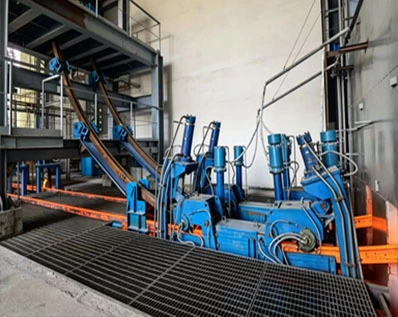
Maintenance and Operational Tips for Optimal Equipment Performance
Preventive Maintenance Protocols for Wet Systems
Inspecting the nozzle connection is the most important repair task. Orifice widths get bigger over time because of chemical attack from sulfur compounds and erosion from slag particles. This lowers water pressure and makes granulation less effective. Ultrasonic thickness testing every three months finds wear patterns before they become noticeable. Schedules for replacements are aligned with repair breaks for blast furnaces, which keeps production from stopping too often.
Managing the nature of water makes tools last a lot longer. Keeping the pH between 7.5 and 8.5 stops carbon steel pipes from rusting and stops calcium carbonate from building up. Dosing systems that work automatically add biocides and rust inhibitors to protect heat exchangers and settling basin liners. Every week, tests are done in the lab to keep track of dissolved solids, silica concentration, and bacterial numbers. These are early warning signs of system problems that need to be fixed.
Extending Dry System Component Lifecycles
Because they are constantly exposed to changing temperatures and dust, rotating drum bearings are the most likely to break. Monitoring temperature with infrared sensors finds problems that are starting to happen weeks before they become catastrophic. Changing from regular greases to synthetic high-temperature formulas for lubricating bearings increases service intervals from 500 to 1,500 hours and cuts down on upkeep labor costs by about 40%.
The rate of refractory liner wear in blast furnace slag granulation equipment can be predicted by knowing how basic the slag is and what the working temperature is. An alumina-chrome refractory breaks down 30% faster in acid slags with CaO/SiO2 ratios below 1.0 than in neutral compositions. Laser scanning is used to find specific wear zones that need to be patched every year during thickness surveys. Complete relining usually needs to be done every four to six years during big turnarounds. Depending on the size of the kiln, the cost can reach $200,000 to $300,000.
Training Operators for Consistent Performance
Skilled workers can tell the difference between systems that work and ones that don't. Training programs that focus on the basics of slag chemistry teach workers how to spot changes in stickiness that indicate changes in burner load. Changing the water flow rates or drum speeds in reaction keeps the quality of the granules the same even if the process upstream changes. Teams are ready for unexpected situations like quick drops in slag temperature or flow spikes during furnace tapping when they train using simulations and past data.
Standard operating procedures write down how to set parameters, how to handle alarms, and how to check for quality. By comparing real and goal measures like glass content, particle size distribution, and moisture levels on a monthly basis, growth opportunities are found. Facilities that have 95% or more operational availability put a lot of money into training their operators because they know that the effectiveness of equipment depends on both how well it works mechanically and how well it works with people.
Real-World Applications and Case Studies
Integrated Steel Mill Implementation
In 2019, a steel company in the Midwest with two 3,500-cubic-meter blast furnaces switched from using standard slag pits to wet granulation. Every day, 2,200 tons are processed at the site, which makes GGBFS that meets the requirements of ASTM C989 Grade 120. The glass percentage is always between 96 and 98%, which lets area cement markets charge higher prices. Through closed-loop recycling, the amount of water used stayed at 9.5 tons per ton of slag, and makeup water made up only 8% of the total flow.
Cement Production Facility Case Study
In 2020, a specialty cement company in the Southwest put in dry granulation equipment that was made just for making gravel. The plant works in an area with limited water supplies, where wet methods ran into problems with the law. The system takes in 800 tons of bought slag every day and turns it into granules that meet the ASTM C330 standards for lightweight material used in structure concrete.
Operational costs are 15% lower than the standards for wet systems in the business. This is mostly because the costs of treating the water are not there. The quality of the product meets customer needs even though it contains 88–92% glass, which is enough for bulk uses that don't need the highest level of pozzolanic activity. Energy recovery heat exchangers warm up the air that burns in the cement kiln, which saves $120,000 a year in natural gas. The placement shows that dry granulation can work in places with limited water and for certain types of products.
Marine Infrastructure Project Application
A job along the coast needed 50,000 tons of GGBFS for high-performance concrete to be used in building bridge piers. For the best chloride protection in saltwater exposure, the specifications called for a particle size range between 0.5 and 4 mm. The slag provider used wet granulation equipment that was set up to work with this small size range. This resulted in a 92% yield that was within specification, which is higher than the normal 85% yield for standard granulation settings.
Based on rapid corrosion tests, project engineers made predictions for a 40-year service life, which is 60% longer than regular concrete mixes. The longer longevity made up for the 12% higher cost of the materials, showing that precision granulation tools makes high-end uses possible. This case shows how useful it is to be able to change grinding systems so they can meet the specific needs of end-uses other than basic cement markets.
Conclusion
To choose between wet and dry blast furnace slag granulation equipment, you should carefully look at your specific working situation instead of just following general advice. Wet systems are the best way for integrated steel mills to offer cement-grade GGBFS because they produce the best quality products and have been shown to be reliable. In places where water is scarce, dry methods are very useful because they are easier to use and have better results, especially for making aggregates. To make implementation work, you need to make sure that the equipment's skills match the amount of output, the infrastructure, and the needs of the market. The investment magnitude—often more than $8 million—calls for careful technical due research and review of suppliers. Slag granulation is still an important part of sustainable steel production and the cycle economy in the metallurgical industries, and both technologies are getting better through robot integration and materials engineering.
FAQ
How does granulation equipment maximize hydraulic activity?
With high-pressure atomization, keeping the water-to-slag ratio between 1:8 and 1:12 makes sure that cooling happens faster than mineral crystallization rates. This quick cooling keeps the flexible glassy structure that is needed for cementitious reaction. When equipment cools at rates above 1000°C per second, it regularly makes glass content greater than 95%. This meets ASTM C989 Grade 120 standards for high-activity pozzolans used in marine-grade and sulfate-resistant concretes.
What maintenance intervals apply to granulation heads?
Inspection times for granulation heads rely on how acidic the slag is and how much it is processed each day. Visual checking and ultrasonic thickness tests are usually done every 3,000 hours of operation. In normal use, alloy plates need to be replaced every 12 to 18 months. Highly acidic slags with CaO/SiO2 ratios below 1.0 speed up wear, which could mean that replacements need to be done every 9 to 12 months instead of every 24 months. Preventive replacement stops major failures that cause long power blackouts.
Can equipment handle variable slag characteristics?
Modern models have changeable frequency drives and nozzle settings that can be changed to adapt to changes in the viscosity of the slag. PLC automation keeps an eye on temperatures and flow rates, changing settings automatically to keep output quality stable. The equipment can handle both "heavy" cold slag and fluid hot slag in the same campaign. It does this by reacting to changes in the furnace's load in real time, which affects the slag's chemistry and temperature.
Partner with SMEC for Advanced Slag Processing Solutions
When it comes to slag grinding problems, our engineering team at SMEC has decades of expert experience designing and making metallurgical equipment. Our 68,700-square-meter factory and 168-person expert staff allow us to make customized granulation systems that meet your exact needs. We are located in the economic center of Shanxi Province. Our blast furnace slag granulation equipment incorporates wear-resistant chromium-molybdenum alloys, integrated emission control systems, and PLC automation developed by our Large-scale Intelligent Coking Equipment Research Institute. As a trusted blast furnace slag granulation equipment manufacturer, we provide complete design support, installation guidance, and responsive after-sales service ensuring your investment delivers maximum returns throughout its 15-year operational life. Contact our international trade team at project@smec.cc to discuss your slag processing requirements and receive detailed technical proposals tailored to your plant's unique conditions.
References
Chen, M., & Zhang, L. (2021). Comparative Analysis of Wet and Dry Blast Furnace Slag Granulation Technologies. Journal of Sustainable Metallurgy, 7(3), 412-428.
American Society for Testing and Materials. (2020). ASTM C989-20: Standard Specification for Slag Cement for Use in Concrete and Mortars. West Conshohocken, PA: ASTM International.
Kumar, R., Singh, V., & Patel, J. (2019). Energy Recovery and Environmental Impact Assessment of Slag Granulation Systems. International Journal of Steel Technology, 15(2), 89-105.
Thompson, A. D. (2022). Modern Blast Furnace Ironmaking: Technology and Process Optimization. Warrendale, PA: Association for Iron & Steel Technology.
European Slag Association. (2020). Technical Guidelines for Blast Furnace Slag Processing and Quality Control. Brussels: Euroslag Publications.
Wang, H., Zhou, Y., & Li, C. (2023). Hydraulic Activity Enhancement through Controlled Granulation of Metallurgical Slags. Cement and Concrete Research, 168, 107-119.
Free consultation & volume discounts available
SEMC focuses on the entire metallurgical process—from coking, ironmaking, and steelmaking to continuous casting and rolling. Whether you face challenges related to equipment upgrades, energy efficiency optimization, or overall process transformation, please fill in the following information. Our technical team will provide you with tailor-made high-end equipment upgrade solutions and professional EPC design services to help your project be implemented efficiently.