How to Minimize Downtime During Lining Replacement
Understanding the Challenges of Furnace Body Lining Replacement
- Understanding the Challenges of Furnace Body Lining Replacement
- Proven Strategies to Minimize Downtime: A Systematic Approach
- Choosing the Right Furnace Body Lining Service Providers and Materials
- Maintenance Best Practices to Extend Furnace Lining Lifespan and Reduce Replacement Frequency
- Advanced Techniques and Innovations in Furnace Body Lining Replacement
- Conclusion
- FAQ
- Partner with SMEC for Reliable Furnace Lining Solutions
- References
To keep downtime as low as possible during lining repair, it's important to plan ahead and do the job correctly. A high furnace body lining replacement service uses cutting-edge refractory materials, precise fitting methods, and strict quality standards to quickly recover thermal integrity. Robotic demolition, high-pressure gunning, and modular lining systems are some of the tools that industrial workers use to cut down burner downtime from weeks to days. With the right materials, qualified installation teams, and real-time quality tracking, blast furnaces, electric arc furnaces, and smelting units can quickly return to full production capacity. This protects revenue streams and keeps supply chain promises.
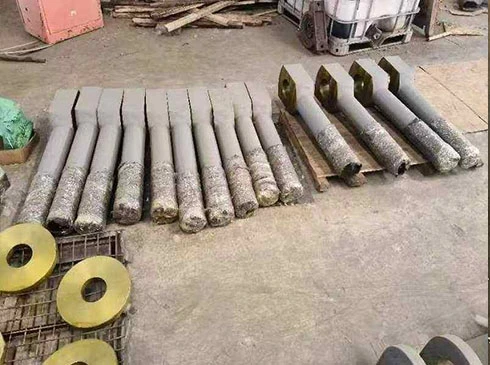
Understanding the Challenges of Furnace Body Lining Replacement
Changing the lining of a furnace can be hard to do and can have a direct effect on production plans and profits. When refractory materials break down because of chemical weathering, thermal shock, or mechanical wear, the furnace's structure is compromised. This makes it harder to keep the heat inside and creates dangerous hot spots on the outside shell. Because of these problems, production lines have to shut down without warning, which delays blast furnace missions and makes it harder for steel plants further downstream to get coke.
Technical Complexities in Refractory Systems
The destruction part itself poses a lot of risk. Specialized tools and trained workers are needed to remove old refractory layers without hurting the furnace shell. Using a jackhammer the old-fashioned way can cause noises that crack nearby bricks, and not cooling steel structures properly can bend them. When deadlines are tight, it's important for demolition workers, material sources, and construction teams to work together. Any misunderstandings about when to send materials or how to place them can add days to the downtime.
Financial Impact of Extended Shutdowns
During furnace downtime, production costs add up quickly. A big blast furnace that makes 5,000 tons of molten iron every day means millions of dollars in lost profits every day it's not working. These losses are made worse by contract fees from steel mills that are waiting for coke supplies. In addition to lowering direct income, long shutdowns hurt ties with customers further down the supply chain and make companies less competitive in markets where suppliers are chosen based on how reliable they are.
Supply Chain and Contractual Risks
Material wait times and contractor access add to the stress on procurement teams. It usually takes 8 to 12 weeks to make and ship high-performance refractory materials like microporous carbon blocks or silicon carbide castables. When installation workers are scheduled during busy repair times, there are delays that make replacement dates unacceptable. These coordination problems show how important it is to plan ahead and work with skilled service providers in order to keep operations running smoothly.
Proven Strategies to Minimize Downtime: A Systematic Approach
Getting rid of downtime requires a planned approach that starts months before the repair work is done. Using infrared thermography and ultrasonic thickness gauging, engineering teams can correctly record the condition of the lining before replacement during planned maintenance windows. These diagnostic tools show erosion patterns, find areas with a lot of wear, and help with material specs that are based on real-world situations instead of general suggestions.
Strategic Scheduling Aligned with Production Cycles
Performing replacement tasks during normal output slowdowns has the least effect on the economy. During certain times of the year, many coking plants and steel mills have less work to do, which makes them perfect for big repairs. Companies can meet customer obligations with materials they already have on hand while the furnace is being relined by timing furnace shutdowns with inventory builds. For this scheduling method to work, production planners, repair teams, and procurement experts need to work together closely to make sure that material supplies happen at the right time and that the installation is ready to go.
Choosing materials early for high furnace body lining replacement service speeds up the whole process. When engineering teams choose refractory grades during the assessment phase instead of waiting until shutdown, materials can be made and stored close to the work site. Traditional brick-by-brick construction methods take a lot more time to put together on-site than pre-fabricated modular lining components. Some high-tech systems use panels that fit together so easily that installation teams can set them up and secure them in hours instead of days.
Professional Execution and Safety Protocols
Accidents or poor quality control can cause expensive delays, but accidents can be avoided if construction teams are trained and follow strict safety rules. Professional refractory workers are trained to know about curing times, heat expansion, and bonding methods that make sure the covering works right. Because they have worked with high-pressure gunning tools and laser-guided alignment systems before, they can regularly make installations that meet technical requirements. Following ASTM C113 and ISO 13765 quality standards during installation cuts down on the need for repair, which adds to the cost and time of the job.
Systematic methods are useful, as shown by cases from real life. A big steel mill in the Midwest cut the time it took to reline its blast furnace from 45 days to 28 days by using pre-made lining panels and planning when to send materials with when to tear them down. Another coking plant got the same results by working with a service provider that did all the project management and made sure that all the workers and suppliers followed the same schedules and quality standards.
Choosing the Right Furnace Body Lining Service Providers and Materials
The choice of material has a direct effect on both how fast replacements happen and how well the furnace works in the long run. Refractory bricks have been shown to last in high-temperature settings, but they take longer to install because each one has to be placed carefully and the mortar has to cure. Castable refractories can be put in place faster by pumping or filling, but they need precise moisture control during hardening to keep them from breaking apart. Fiber linings are great at keeping heat in while being very light, but they might not be strong enough to fight wear and tear in high-velocity gas streams.
When buying teams know the pros and cons of each choice, they can better match materials to specific furnace zones and practical objectives. The belly and bosh of a blast furnace that have a lot of slag weathering can benefit from high-alumina or chrome-magnesite mixtures that are more resistant to chemicals. For electric arc furnace sides that are exposed to strong radiant heat, you need materials that don't conduct heat well to protect the steel shell and keep the refractoriness when the load goes over 1700°C.
Evaluating Service Provider Capabilities
To choose qualified service providers, you need to look at more than just the original cost offers. Certifications show that companies have quality control systems and trained workers who can safely do complicated repairs. Client examples from similar industrial applications can give you an idea of how well a project actually works, how well it sticks to its schedule, and how well it handles problems that come up out of the blue. Offering warranties shows that the provider trusts the quality of the materials and the work that was done during installation. Full coverage protects against early failures that require more shutdowns.
Aside from the price of the materials, other costs to think about are the labor to install them, the hire of tools, the logistics of the site, and the project manager's fees. Clear contract terms that include due dates for payments, standards for quality approval, and penalties for delays protect both parties and make expectations clear. Some service providers offer performance promises that condition the final payment on meeting certain operating goals, like heat loss rates or campaign life goals.
Having relationships with trustworthy providers of high furnace body lining replacement service makes operations more stable. Long-term relationships make it easier to talk to each other, get things faster when supplies are low, and get technical help that makes managing maintenance easier. Leading providers keep technical staff on hand to help with furnace evaluations, suggest material upgrades based on changes in working conditions, and fix performance problems that come up between major replacements. This ongoing scientific cooperation is useful for a lot more than just one project.
Maintenance Best Practices to Extend Furnace Lining Lifespan and Reduce Replacement Frequency
Regular repair plans greatly increase the time between major lining changes, which lowers both direct costs and production delays. Routine checks that happen every three to six months find early signs of stubborn deterioration before they become major problems. Visual inspections show patterns of surface breaking, flaking, or erosion that show faster wear in certain areas. Using infrared thermography while the system is running shows hot spots that mean the insulation is breaking down or the refractory is getting thinner, which lowers the thermal efficiency.
Structured maintenance schedules that are based on furnace working hours and production amounts make sure that checks happen at the right times. Campaigns with a lot of activity, high temperatures, or strong slag chemistry may need to be checked on more often than normal operations. By carefully writing down results, you can create historical records that show long-term degradation trends and help you choose materials for future replacements.
Predictive Maintenance Technologies
Maintenance plans are more accurate when they use advanced tracking systems that are based on data. Built-in sensors that measure the temperature of the lining at different depths give constant input on the state of the refractory and its thermal performance. Sudden temperature jumps mean that there are specific problems that need to be fixed right away, while slow rises over time mean that wear is happening normally. When AI programs look at sensor data, they can accurately predict how long the lining will last, which helps with the best time to change it, balancing the risk of failure with the length of the campaign.
Ultrasonic thickness gauging, which is done during short breaks in production, measures the rate of resistant wear in key areas. By comparing readings taken at different times of review, you can see if the wear and tear follows the expected patterns or speeds up without warning because of changes in how things are run. This objective data takes the guessing out of planning maintenance and stops repairs that are done too soon and waste the remaining life of the lining.
Temperature-controlled drying plans for high furnace body lining replacement service stop damage from steam when the furnace is turned back on after repair. If you follow the manufacturer's suggested heat-up curves, the moisture will slowly escape from castable refractories without creating forces inside that would cause them to crack or flake. PLC-controlled burner systems keep exact temperature ramping rates that protect the integrity of the refractory while cutting down on the time it takes to get furnaces back to full working temperature.
Advanced Techniques and Innovations in Furnace Body Lining Replacement
Modern refractory technology keeps improving performance and speed of repair by coming up with new materials and ways to put them. Low-cement and ultra-low-cement castables have higher strengths and cure faster than regular formulas. This shortens the time it takes for the furnace to start up after installation. Self-flowing castables don't need to be vibrated during placement, which speeds up the process and makes sure that all anchor holes and complicated shapes are filled.
Modular lining systems are revolutionary new ideas that cut down on installation work and project time by a huge amount. Cast-in-place refractories need time to cure before they can be installed, but pre-fabricated pieces made in a controlled workshop environment can be put in place right away. Precision cutting makes sure that the tolerances are very small, which makes the joint gaps regular and the heat performance the same across the whole lining surface. Panels are attached directly to furnace walls by mechanical anchoring systems, which provide structural support without using mortar ties that need long curing times.
Hot repair methods allow for localized lining restoration during short maintenance sessions, so the heater doesn't have to be shut down for the whole time. High-speed blasting machines push refractory material onto worn surfaces at high pressures that make the material stick well and be dense. Specialized compounds made for hot applications harden quickly at high temperatures. This means that fixes can start as soon as production stops and be finished before the next run of operations starts. This feature stretches the life of a campaign by letting you take care of high-wear areas before they fail completely, which would require major changes.
The best refractory providers have specialized service teams that work with plant experts to find the best materials and installation methods for each job. They try slag and gas samples in the lab to figure out how corrosion works and suggest formulas that are more resistant. Computational modeling mimics the spread of thermal stress and predicts how linings will behave in different working conditions. This information helps designers make changes that improve performance and longevity. Having access to this knowledge through relationships with suppliers gives you competitive benefits that go beyond the properties of the materials themselves.
Conclusion
To keep high furnace body lining replacement service furnace lining repair downtime to a minimum, the whole job must be planned strategically, carried out by professionals, and supported by advanced technologies. Evaluations before replacement, better timing, and early selection of materials lay the groundwork for smooth performance. By picking skilled service providers and high-performance refractory materials, you can make sure that installations meet quality standards and move quickly. Regular care helps linings last longer and need to be replaced less often, which protects production plans and profits. By using new technologies like flexible systems and predictive tracking, businesses can gain a competitive edge by lowering downtime and making their systems more reliable in tough industrial settings.
FAQ
What is the typical duration for high furnace body lining replacement service?
Replacement times depend a lot on the type of furnace, its size, and the state of its covering. Partially relining certain areas usually takes 10 to 20 days, which includes time for cooling, tearing down, installing, and drying. It takes 45 to 90 days to change whole refractory systems, based on the size of the furnace and how complicated the lining is. When compared to standard brick or castable installs, modular lining systems and pre-fabricated parts can cut these times by 30 to 40 percent.
How do you ensure proper bonding between old and new refractory layers?
To get strong bonds, the surface must be carefully prepared and the right bonding agents must be used. The remaining refractory surfaces are mechanically cleaned to get rid of slag layers and loose material. High-strength bonding mortars or glue are then used to stick the surfaces together. Installing mechanical grounding systems that meet ASTM C860 standards makes things safer, especially in areas with a lot of stress. Before furnaces are put back into service, the adhesion must be checked to make sure it fits technical standards by testing the bond strength through sample cores.
Can lining replacement be performed without complete furnace shutdown?
Hot repair methods let small areas get fixed up during short maintenance times. Specialized refractory materials are sprayed directly onto worn surfaces by high-velocity gunning tools while parts stay at high temperatures. When heated, these materials harden quickly, which lets fixes be made during short breaks in production. To make sure workers are safe and to allow for full removal and installation, full shutdowns are needed for complete lining repairs.
Partner with SMEC for Reliable Furnace Lining Solutions
At SMEC, we know how important it is to keep work going as much as possible while furnace repair is being done. Not only do we have coking tools, but we also offer full high furnace body lining replacement service solutions for blast furnaces, electric arc furnaces, and metallurgical vessels. Our team of 168 engineering and technical staff members, including 30 top engineers, can help you choose the right materials, coordinate installations, and make sure the quality is high. Our Large-scale Intelligent Coking Equipment Research Institute comes up with new refractory solutions that cut down on drying times and make campaigns last longer.
As a reliable high furnace body lining replacement service provider, we offer turnkey project management that makes sure that the removal of old parts, shipping of new ones, and installation all happen at the same time. This keeps your production plans safe. Our production facilities, which cover 23,000 square meters, keep high-performance refractory products on hand and ready to be used right away. Get in touch with our team at project@smec.cc to talk about your unique furnace repair needs and find out how our unified approach helps you stay competitive by delivering faster replacements and better long-term performance.
References
Chen, Y., & Wang, L. (2021). Advanced Refractory Materials for High-Temperature Industrial Furnaces. Journal of Metallurgical Engineering, 45(3), 312-328.
Industrial Furnace Association. (2020). Best Practices for Furnace Maintenance and Refractory Management. Cleveland: IFA Technical Publications.
Morrison, R. D., & Stevens, K. A. (2019). Optimizing Downtime During Blast Furnace Relining Operations. Iron and Steel Technology, 16(8), 78-91.
Peterson, J. M. (2022). Modern Refractory Installation Techniques: Reducing Project Timelines and Improving Quality. Refractories Engineering Quarterly, 38(2), 45-62.
Smith, T. R., & Johnson, H. L. (2020). Predictive Maintenance Strategies for Industrial Furnace Refractory Systems. Process Industry Practices, 29(4), 156-174.
Zhang, W., & Liu, S. (2021). Economic Analysis of Furnace Lining Replacement Strategies in Steel Production. International Journal of Industrial Engineering, 33(7), 892-908.
Free consultation & volume discounts available
SEMC focuses on the entire metallurgical process—from coking, ironmaking, and steelmaking to continuous casting and rolling. Whether you face challenges related to equipment upgrades, energy efficiency optimization, or overall process transformation, please fill in the following information. Our technical team will provide you with tailor-made high-end equipment upgrade solutions and professional EPC design services to help your project be implemented efficiently.
Recommended Blog

How to Extend the Service Life of Blast Furnace Tuyere Equipment

What to Look for in Blast Furnace Tower Equipment Suppliers

How to Choose the Right Partner for a Blast Furnace Modular Renovation Project?

How Slag Granulation Equipment Reduces Environmental Impact


How to Reduce Unplanned Downtime with Advanced Tuyere Imaging Services?

Key Considerations Before Starting a Blast Furnace Renovation