Why Does Blast Furnace Need Oxygen-Enriched Combustion?
Understanding Oxygen-Enriched Combustion in Blast Furnaces
- Understanding Oxygen-Enriched Combustion in Blast Furnaces
- Limitations of Traditional Air Combustion and Evolution to Oxygen-Enriched Systems
- Evaluating and Choosing the Right Oxygen-Enriched Combustion System for Your Blast Furnace
- Energy and Environmental Benefits Driving Adoption in Global Blast Furnace Operations
- Maintenance, Service, and Long-Term Support for Oxygen-Enriched Combustion Systems
- Conclusion
- FAQ
- Partner with SMEC for Advanced Blast Furnace Solutions
- References
There is more and more pressure on modern blast furnaces to make more while also saving costs and following environmental rules. Traditional air-blown blast furnaces use natural air that has about 21% oxygen, which slows down the burning process and lowers output. By carefully pumping high-purity oxygen into the blast air circuit, the oxygen-enriched combustion system service for the blast furnace overcomes these drawbacks and increases the oxygen level in the tuyere area. This technology changes the way combustion works, which lets steelmakers get higher throughput, use less fuel, and run cleaner operations without affecting the stability of the furnace or the life of the refractory.
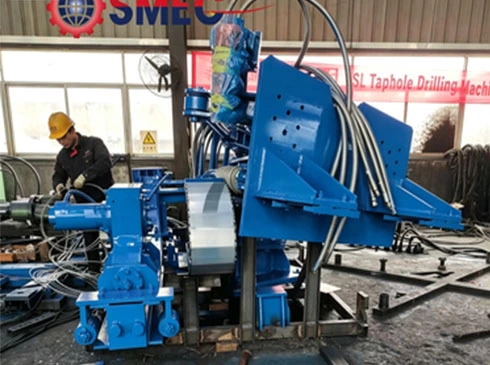
Understanding Oxygen-Enriched Combustion in Blast Furnaces
What Does Oxygen Enrichment Do to Combustion Chemistry?
The chemical environment inside the blast furnace raceway changes a lot when oxygen is added to the combustion. Adding extra oxygen above the level in the air around us makes the burning of pulverized coal and coke much hotter. Higher levels of oxygen speed up oxidation processes, which raises the estimated flame temperature from the normal ranges to between 2000°C and 2300°C. This extra heating energy makes it easier to reduce the iron ore and makes the furnace stack warmer overall.
Core Components of a Professional Enrichment System
A full oxygen enrichment device has several combined parts that work together. High-purity gas is sent through carefully controlled pipelines by oxygen supply units. Flow meters and pressure regulators keep delivery rates stable even when blast pressure changes. Modern installations have automated control valves that can shut off safely in an emergency with response times of less than two seconds. Industry-standard protocols make it easy for process control systems to connect to current SCADA platforms. This lets managers see enrichment rates and combustion success in real time.
Safety Features Built Into Modern Systems
When working with high-concentration oxygen streams, safety is still the most important thing. Professional systems have multiple stages of pressure control, two ways to measure flow, and automated nitrogen purging protocols. All the things that come into contact with enriched oxygen meet oxygen-service grade standards like ASTM G63 or BAM compliance. During testing, helium leak detection checks the stability of the pipeline, and UV light inspection makes sure that all the surfaces in the system are grease-free. These strict rules keep fires from starting and make sure that equipment can work reliably for a long time in harsh industrial settings.
Limitations of Traditional Air Combustion and Evolution to Oxygen-Enriched Systems
Four Critical Production Bottlenecks in Conventional Blast Operations
Conventional air-blown blast furnaces have ongoing operating problems that make them less profitable and competitive. Because the tuyere zone has low burning efficiency, the pulverized coal and coke don't get enough air to completely burn out. Carbon that hasn't been burned flees with slag and top gas, which raises the cost of coke and raw materials. Production capacity reaches a maximum point because the rates of oxidation and reduction reactions can't go faster than what air can handle. The furnace utilization rate reaches a peak, which stops it from staying in high-load mode even when market demand calls for more output.
Uneven distribution of oxygen inside the boiler with an oxygen-enriched combustion system service for blast furnace makes the gas flow patterns rough. Lack of oxygen in one area can cause temperature changes and unstable burden descent. A lot of scaffolding, slips, and hanging conditions make it hard for operators to keep the furnace running smoothly. Too much carbon monoxide, nitrogen oxides, and particulate matter are released when combustion is not complete. When there are high pollution alerts, plants risk breaking the rules because the back-end environmental control systems have too much to handle. These problems make it harder and harder for standard air blast to meet the needs of modern industry and the environment.
How Does Oxygen Enrichment Overcome These Constraints?
These structural problems can be fixed by switching to oxygen-enriched combustion, which makes the chemistry and temperature conditions inside the boiler much better. More air at the tuyere makes sure that the fuel burns completely, which lowers the coke rate and the amount of unburned carbon that escapes. Higher flame temperatures speed up reduction processes, which lets the furnace keep working at a higher level of efficiency without losing its steadiness. Better spread of gas flow keeps the temperature stable, which lowers the number of operating problems and increases the campaign's life.
The environment benefits right away because more complete combustion stops the production of carbon monoxide and particles where they start. Desulfurization, denitrification, and dust collection systems further downstream don't have to work as hard because of plants. Many integrated steel plants say that the money they save on electricity and the extra work they can do pays for themselves in six to twelve months. Because of these measurable gains, oxygen enrichment is no longer an extra choice for competitive blast furnace operations; it is now required.
Evaluating and Choosing the Right Oxygen-Enriched Combustion System for Your Blast Furnace
Performance Metrics That Matter for Procurement Decisions
To choose the right enrichment system, you need to carefully look at its technical specs and working factors. Usually, enrichment rates are between 2% and 10% higher than the air's oxygen level. Accurate flow control, within ±0.5%, keeps the burning conditions stable. Systems must be able to respond quickly to emergencies and turn off automatically in less than two seconds. The cost and viability of a retrofit depend on how well it works with the current furnace equipment and hot blast systems.
Case studies that show real-life results should be used to prove that emission reduction works. Specific fuel consumption should go down, which can be measured in kilograms per tonne of hot metal at plants. Less top gas volume and a better gas composition are signs of more efficient combustion. Environmental standards must be met by regulatory compliance features that are in line with both local and international standards. This makes sure that the system can support long-term operational permits.
Service Network and Technical Support Considerations
Long-term operational success depends a lot on what the supplier can do after delivering the equipment. As part of full aftermarket service, sensors are calibrated every three months, oxygen lances' thickness is tested with ultrasound, and control system parts are systematically inspected. Downtime risk is kept to a minimum by having reliable spare parts on hand, and problems are quickly fixed when they happen with on-site technical support. Full PLC and DCS integration from suppliers makes system commissioning and operator training go more quickly.
Teams that buy things should give more weight to partners who have a history of success in using Oxygen-enriched Combustion System Service for Blast Furnace in industrial processes. Having experience with furnaces of similar types and production sizes lowers the risks of merging and speeds up the time it takes to reach full performance. The ability to customize systems lets them work with the limitations of a given place and the tastes of operators. Strong technical help during the planning and installation steps makes sure that the best configuration is used to get the best return on investment.

Energy and Environmental Benefits Driving Adoption in Global Blast Furnace Operations
Quantifiable Fuel Savings and Cost Reduction
The economy benefits right away from oxygen enrichment because it cuts down on fuel use. Lower coke rates directly lead to lower costs for raw materials, which makes integrated steel makers more competitive. When combustion efficiency goes up, more heat is available for reduction processes instead of being lost in the waste gases. Higher fertilizer levels cause plants to be more productive over time without using more energy, which makes the whole system more thermally efficient.
When you add up the money you'll save on fuel, productivity, and environmental compliance, the financial case gets stronger. Less pollution means less money spent on following rules and less risk of being affected by ways to price carbon. When the furnace utilization rate is higher, fixed costs are spread out over more output, which makes the unit economics better. Because of these many benefits, oxygen enrichment is still being used more and more in steel markets around the world.
Contributing to Corporate Sustainability Goals
In addition to direct economic benefits, oxygen enrichment helps companies with their larger efforts to be more environmentally friendly. Steelmakers can meet stricter emissions goals set by governments and industry groups when the carbon density per tonne of hot metal is lower. Less pollution means better air quality around factories, which helps the towns nearby and makes it easier for businesses to get social license to operate. When operational stability is improved, the number of upsets that can cause emergency leaks or unexpected downtime goes down.
Modern oxygen systems have made safety improvements that help reach sustainability goals even more. Sophisticated control systems keep operators out of dangerous situations, and automatic safety measures lower the risk of accidents. Comprehensive training programs make sure that employees know how the system works and what to do in a situation. All of these things make oxygen enrichment a key part of making steel in a way that is responsible and in line with world climate goals.
Maintenance, Service, and Long-Term Support for Oxygen-Enriched Combustion Systems
Structured Maintenance Programs for Maximum Uptime
A disciplined approach to system upkeep and tracking is needed to keep performance at its best. Flow meters, pressure controllers, and control valves are checked every day to make sure they are working correctly. Regular monthly calibration checks make sure that the accuracy of the measurements stays within the acceptable range. This stops any drift that might affect the control of combustion or safety margins. As part of yearly thorough checks, the oxygen supply lines are tested for pressure, the valve seals are checked, and the emergency shutoff is confirmed to work.
Preventative maintenance keeps technology from breaking down when it's not supposed to and makes it last longer. Monitoring systems keep an eye on changes in performance and let workers know about problems before they become major. Clear escalation rules spell out when plant workers should call in professional service engineers to do fixes or diagnostics that require more advanced knowledge. This organized method cuts down on production stops as much as possible while keeping the safety and dependability needed for continuous blast furnace operation.
Upgrading Systems with Industry 4.0 Features to Existing Systems
Modern digital technologies can be added to current oxygen enrichment systems through advanced repair services for oxygen-enriched combustion system service for the blast furnace. Smart sensors give detailed real-time information on the rates of oxygen flow, pressure profiles, and conditions of combustion. Predictive analytics find the best enrichment methods based on changes in blast temperature, ore quality, and output goals. Integration with process control systems used across the whole plant allows for coordinated optimization of the whole ironmaking process.
These technological improvements make investments in oxygen enrichment more secure for the future while also making operations more flexible. Technical experts can support multiple places more efficiently with remote tracking, which cuts down on the need for specialist staff on-site. Data-driven optimization keeps improving enrichment methods so that installed systems can give you the most value. With this change, oxygen enrichment is no longer just a piece of fixed equipment but a smart system that helps the whole business work better.
Conclusion
Oxygen enrichment has gone from being an idea for an experiment to a necessary technology for blast furnace operations to stay competitive. Traditional air-blown stoves have problems that can't be fixed when it comes to output, environmental performance, and how well the fuel burns. Adding oxygen directly fixes these problems. Modern systems offer measurable advantages in terms of how much fuel they use, how much they can produce, how well they control pollution, and how stable they are in operation. As rules about the environment get stricter and competition in the market heats up, steel makers see enrichment not as a choice but as essential infrastructure for long-term profits. Oxygen-enriched combustion is a top priority for forward-thinking metallurgical operations because it uses tried-and-true technology, has high economic returns, and comes with full service support.
FAQ
How does oxygen enrichment affect blast furnace refractory life?
When oxygen-enriched combustion systems are set up correctly, they actually make refractory last longer by keeping temperature profiles stable and lowering temperature changes. Controlled enrichment stops the hot spots and thermal cycles that wear down refractory materials too quickly. Thermal modelling is used in systems to make sure that flame temperatures stay within safe ranges for the materials that are already used.
Can existing blast furnaces be retrofitted with oxygen enrichment systems?
With careful engineering analysis, enrichment systems can be successfully added to most standard blast furnaces. Retrofit projects look at the capacity of the hot blast system, the layout of the tuyere, and the oxygen supply equipment that is already in place. Modular system designs cut down on installation time and let implementation happen in stages. Suppliers with a lot of experience can check for compatibility and make solutions that are unique to each boiler design.
What oxygen purity levels are required for blast furnace enrichment?
For industrial oxygen enrichment, 90–95% pure oxygen from air separation units or delivered liquid oxygen is most often used. Higher levels of purity don't add much more value and raise the cost of supplies. When system designs figure out effective enrichment rates and combustion chemistry, they take into account how much nitrogen is in industrial-grade oxygen.
Partner with SMEC for Advanced Blast Furnace Solutions
As a member of the Taiyuan Silian Heavy Industry Group, SMEC has a lot of experience with building metallurgical tools for use in oxygen-enriched Combustion systems, with Oxygen-enriched combustion system service for blast furnaces. Our engineering team has helped with a lot of blast furnace optimization projects. They have advanced planning skills as well as hands-on experience with installation and testing. Through our Large-scale Intelligent Coking Equipment Research Institute, we work with top research centers to create unified answers that solve real-life production issues. As a supplier with a long history in China's national energy and heavy chemical industry base, we know what modern steel producers need in terms of technology and how to run their businesses.
Our all-around method includes designing the system, making the equipment, helping with installation, and providing ongoing expert support. Get in touch with our team at project@smec.cc to talk about how adding oxygen can improve the performance of your blast furnace while also meeting strict environmental standards.
References
1. Geerdes, M., Toxopeus, H., & van der Vliet, C. (2009). Modern Blast Furnace Ironmaking: An Introduction. IOS Press.
2. Biswas, A.K. (1981). Principles of Blast Furnace Ironmaking: Theory and Practice. Cootha Publishing House.
3. Peacey, J.G., & Davenport, W.G. (1979). The Iron Blast Furnace: Theory and Practice. Pergamon Press.
4. Tupkary, R.H., & Tupkary, V.R. (2008). An Introduction to Modern Steel Making. Khanna Publishers.
5. Zhang, J., Liu, Z., & Yang, T. (2013). Oxygen Blast Furnace Technology for Carbon Dioxide Emission Reduction in Ironmaking. Journal of Iron and Steel Research International, 20(3), 5-11.
6. American Iron and Steel Institute. (2018). Improving Energy Efficiency in Blast Furnace Operations through Advanced Process Control. AISI Technical Report Series.
Free consultation & volume discounts available
SEMC focuses on the entire metallurgical process—from coking, ironmaking, and steelmaking to continuous casting and rolling. Whether you face challenges related to equipment upgrades, energy efficiency optimization, or overall process transformation, please fill in the following information. Our technical team will provide you with tailor-made high-end equipment upgrade solutions and professional EPC design services to help your project be implemented efficiently.