Blast Furnace Equipment Upgrade Through Modular Renovation: A Practical Guide
Blast Furnace Equipment Upgrade Through Modular Renovation: A Practical Guide
Understanding Modular Renovation for Blast Furnace Equipment
- Understanding Modular Renovation for Blast Furnace Equipment
- Planning and Executing a Modular Renovation Project
- Comparing Modular Renovation with Traditional and Full Rebuild Approaches
- Procurement Strategies & Selecting the Right Partners for Modular Renovation
- Case Studies and Future Outlook of Modular Blast Furnace Renovations
- Conclusion
- FAQ
- Partner with SMEC for Expert Modular Blast Furnace Renovation Solutions
- References
When thinking about major upgrades to a blast furnace, it's not enough to just replace worn parts; the goal is to keep downtime to a minimum while increasing efficiency. A modular renovation project for the blast furnace is an innovative engineering plan in which important systems like furnace shells, cooling staves, refractories, and piping networks are built in large modules before being brought to the site. This method directly addresses the steel industry's most expensive problem: production shutdowns that last too long. Traditional brick-by-brick relining can stop operations for months. Modular methods, on the other hand, shorten overhaul cycles to just a few weeks. This keeps operations running smoothly and keeps the money coming in while improving safety at work through controlled assembly environments.
Understanding Modular Renovation for Blast Furnace Equipment
What Makes Modular Renovation Different
In the past, furnace overhauls were done one step at a time on-site, which left projects open to delays caused by bad weather and a lack of skilled workers. This made safety risks even higher. Modular restoration changes this process in a big way by moving the construction work to specialized buildings with high-tech tools and quality-controlled areas. When big assemblies get to the plant, they are ready to be put together quickly. This turns what used to require managing hundreds of workers on-site into a more efficient logistics operation.
Real practical problems are fixed this way. Steel mills no longer have to make the painful decision of keeping equipment that is breaking down or taking long-term revenue losses. The parallel workflow, in which new modules are built while existing furnaces keep making things, is a useful solution that meets both engineering needs and business needs.
Technical Precision and Performance Standards
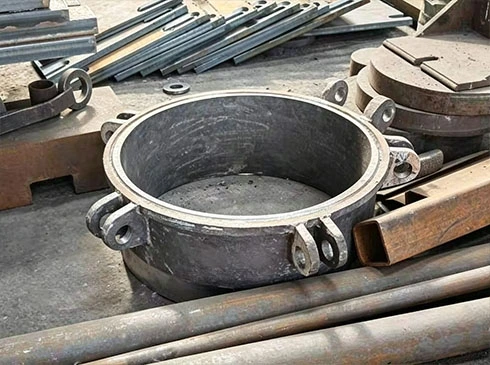
The quality of a modular makeover is determined by engineering limits. Through CNC machining and 3D laser scanning verification, modules keep their dimensions within ±2mm of accuracy. These aren't just made-up specs—this level of accuracy makes sure that the new foundations fit in perfectly and gets rid of the alignment problems that come with other retrofits. Copper or cast iron cooling staves with high conductivity are combined with carbon-microporous refractories that are made to survive temperatures inside that go over 1500°C.
Following ISO 9001, AWS D1.1 welding standards, and ASME pressure component specifications for the Modular Renovation Project for the Blast Furnace is more than just following the law; it shows a dedication to making structures that will hold up against high temperature changes and dynamic stress. When purchasing managers look at potential sellers, these licenses show how well they can make things and how they ensure the quality of their products.
Operational Benefits Beyond Faster Installation
Cutting down on-site build time by 40–60% has direct benefits, but the benefits go further and include keeping operations running smoothly. It's easier to follow environmental rules when things are made in controlled sites with well-established methods for managing emissions. When complex assembly tasks are moved from crowded furnace foundations to purpose-built workshops with good lighting, ventilation, and access to tools, worker safety goes up by a huge amount.
Modern modular systems have digital integration features that let you track performance in real time and plan repair ahead of time. Adding sensors to modules during assembly gives maintenance teams continuous data streams on refractory wear patterns, the efficiency of the cooling system, and the structural integrity of the modules. This lets them deal with problems before they happen. With this technology layer, furnace management goes from being an immediate crisis reaction to being a strategic asset optimization.
Planning and Executing a Modular Renovation Project
Strategic Project Planning and Risk Management
A modular renovation that goes well starts a long time before the first module shows up. As part of thorough planning, existing structures are scanned with a 3D laser to make digital twins, which are exact digital copies that help with module design and find any possible interface problems before the manufacturing process starts. This earlier investment in digital modeling stops expensive changes to the field and makes sure that old foundations and new flexible parts can work together in terms of size.
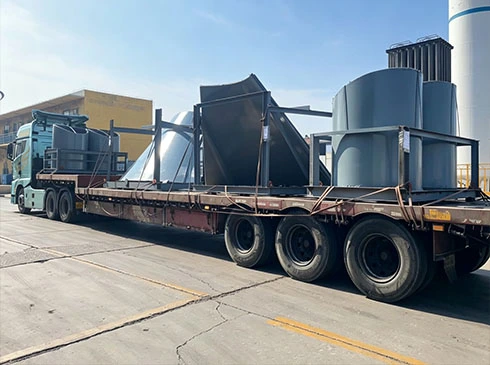
When figuring out the risk, you have to take into account the specific logistics of each place. When transportation plans, the size of the modules, their weight limits, route restrictions, and the availability of cranes are all taken into account. Self-Propelled Modular Transporters (SPMTs) that can move loads of 500 to 1000 tonnes need certain conditions to be met on the job site. Working together with logistics experts early on keeps projects from being held up or going over budget because of unexpected transportation problems.
Workflow Coordination Across Multiple Stakeholders
Engineering firms, component manufacturers, logistics providers, and plant operations teams must work together perfectly in the Modular Renovation Project for the Blast Furnace to make modules, transport them, and install them. Clear communication protocols set up during the planning stages stop coordination problems that can go wrong on big industrial projects. Milestone-based schedules with built-in backup plans can handle the expected small changes that need to be made without putting activities on the critical path at risk.
There are quality control checks at every step of the process. Before modules leave the fabrication facility, Non-Destructive Testing (NDT) using x-rays and ultrasounds checks the integrity of the welds. Testing for hydrostatic pressure at 1.5 times the working pressure shows that the cooling system works well. Trial assembly in the workshop makes sure that the bolt holes are lined up correctly and that the piping interfaces work with each other. This way, any problems can be fixed in a controlled environment instead of during high-pressure installation windows.
Safety Protocols and Workforce Training
When moving heavy modules, there are some safety issues to think about. When rigging estimates are done, they need to take into account dynamic loads that happen during lifts, along with safety factors that are right for how important furnace parts are. Detailed lift plans show possible swing zones, set off limits, and describe how crane operators and people on the ground can talk to each other.
Training for workers includes more than just general safety in the workplace. It also covers specifics of modular renovations. Installation crews need to know how to do precise alignment and torque-controlled bolting and protect refractory materials while moving and placing them. Putting money into thorough training programs cuts down on installation mistakes that slow down systems and wear out parts faster.
Comparing Modular Renovation with Traditional and Full Rebuild Approaches
Time Impact and Production Loss Analysis
In traditional renovation methods, big overhauls of furnaces usually take 90 to 120 days of downtime. When this happens, integrated steel mills lose the ability to use blast furnaces. This affects operations further down the line, which in turn affects steel production schedules, customer commitments, and the recognition of revenue. By doing most of the building work off-site while the current equipment is still working, modular renovation cuts down on important downtime to 30 to 45 days.
This shortening of time has big cash benefits that go beyond simple estimates of the daily production value. Shorter break gaps lower the overall risk from weather events or supply chain disruptions, lower the costs of mobilizing contractors, and reduce the need for temporary facilities. Mills keep their production schedules more stable, which helps them keep customers and avoid losing market share during long supply gaps.
Cost Structure and Return on Investment
Modular renovation has higher upfront engineering and fabrication costs than traditional methods, but when production loss is properly valued, the total project economics favor modular methods. A blast furnace that makes 5,000 tonnes of hot metal every day makes a big contribution margin. By avoiding 45 days of downtime, 225,000 tonnes of production capacity are kept, which brings in a lot more money than the modular construction extra.
When you use flexible methods, you can better use your resources. Instead of keeping large construction crews on-site for long periods of time, mills focus on a small group of workers during short, intense installation windows. This lowers the cost of housing, makes site logistics easier, and keeps operations from being interrupted by hundreds of contractors working in industrial facilities that are already open.
Flexibility and Scalability Advantages
The modular design philosophy lets you do renovations in stages that match the use of capital with business needs and budget cycles. Mills can focus on updating their cooling systems in one effort and then work on updating their refractories or charging equipment in later stages. This adaptability lets things keep getting better little by little instead of forcing all-or-nothing choices that put a strain on capital budgets and cause long-lasting operational uncertainty.
Scalability includes planning for future growth. Modular systems with standardized connections can be expanded to handle more work or new technology without having to update the whole system, as demonstrated by the Modular Renovation Project for the Blast Furnace. This design method makes furnaces last longer by letting technology change at the same rate as improvements in automation, emission control, and energy economy.
Procurement Strategies & Selecting the Right Partners for Modular Renovation
Evaluating Supplier Capabilities and Experience
When choosing modular renovation partners, you need to look at more than just their producing skills. Look over project files that are just for blast furnace repairs of the same size and level of difficulty. If a supplier has worked with brownfield sites before, they know how to deal with restrictions, transport heavy modules, and run rapid installation campaigns. They can also help you solve problems quickly and effectively, which will save you a lot of money and time on your important project.
When judging technical knowledge, you should look at things like the qualifications of the engineering staff, the design software's abilities, and the equipment in the fabrication center. Modern modular renovation needs complex 3D modeling integration between systems for design and production. Suppliers who buy laser tracker verification equipment, automated welding systems for key parts, and full NDT skills show that they are dedicated to meeting the high standards of accuracy needed for these projects.
Quality Assurance and Compliance Verification
Certification compliance is the minimum standard; a deeper quality investigation looks at the actual methods and systems for keeping records. Ask for detailed quality control plans that explain how to inspect, how often to test, and what the acceptance criteria are for important parts. Suppliers should show proof of material tracking that includes refractory material specs, cooling element metallurgy certifications, and structural steel test records that meet certain grade requirements.
Superior suppliers are different from basic commodity providers because they offer warranties and help after the installation is done. Suppliers who offer full warranties that cover both manufacturing flaws and performance guarantees show that they are confident in the quality of their engineering and fabrication. Having access to technical support during the commissioning and early operation phases makes sure that small changes that improve system performance can be made quickly.
Contract Structuring and Risk Allocation
Clear plan limits, payment schedules for milestones, and performance standards are all parts of good contracts. Payment plans based on confirmed completion milestones, such as module fabrication completion with inspection sign-off, delivery to site, successful installation, and performance acceptance testing, make sure that supplier incentives are aligned with project success and protect client interests by allowing for measurable progress verification.
Risk allocation rules cover transportation insurance, who is responsible for site access, and who is responsible for coordinating the interface. Clear language in contracts keeps people from arguing about who is responsible when there are problems coordinating new modular parts with current plant systems. Well-structured contracts include thorough technical specifications as attachments to the contract. This makes it clear what the performance standards and acceptance factors are.
Case Studies and Future Outlook of Modular Blast Furnace Renovations
Documented Performance Improvements
Recent modular renovation projects in integrated steel plants show that this method works, as shown by measured results. One large metalworking company replaced cooling stave systems with modules that were already put together. This cut planned downtime from 75 days to 38 days and improved the uniformity of the refractory temperature compared to the old system. The controlled plant assembly setting got rid of the delays and uneven quality caused by bad weather that happened during their previous renovation.
In a different case, the whole furnace shell had to be replaced, which at first seemed impossible because of the logistics of heavy transport. Modules weighing more than 800 tonnes were delivered successfully thanks to careful transportation planning that used SPMTs and temporary road strengthening. The project team was able to meet all performance requirements on time by first doing thorough digital planning and then accurate work in the field. The result was a fully functional furnace that met all performance standards.
Emerging Technologies and Industry 4.0 Integration
Smart component technologies and predictive analytics will be used in the modular renovation project for the blast furnace and in modular renovations of the future. Embedded sensor arrays that are built into modules during production give engineers a new way to see how components work and how they break down. When these data sources are analyzed by machine learning algorithms, they find small patterns that point to problems that are starting to happen long before they are found by standard inspection methods. This makes it possible for truly predictive maintenance strategies.
The renovation process is also affected by ideas from Industry 4.0. With digital twin technology, control systems can be tried against realistic models before they are installed in the real world. This is called "virtual commissioning." This method finds mistakes in the code, improves operating parameters, and teaches operators using realistic models. All of this is done before the actual shutdown of the furnace starts, making the most of the short downtime times.
Realistic Timeline Expectations
Usually, it takes 8 to 12 months for engineering design, module fabrication, and pre-assembly verification to finish before the actual installation on-site. This longer part of planning is what needs to be done in order for the on-site execution to go quickly. Procurement teams should start planning projects a long time before they need to be finished, because the parallel process structure requires time to be spent up front in order to save time later on.
How long a project takes depends on the scope of the renovation, the complexity of the modules, and any site-specific limitations. It can take 10 to 14 months from the time the contract is awarded until the cooling system is fully operational again for retrofits. More extensive shell replacement projects can take 14 to 18 months. Setting realistic deadlines early on in the planning process keeps people from having too high of hopes, which can lead teams to take shortcuts that hurt quality or safety.
Conclusion
The costs of upgrading a blast furnace are completely changed by modular renovation, which cuts down on downtime, improves quality control, and allows for ongoing operating improvement. This method changes big changes from damaging events that need long production shutdowns to doable projects that can be done with little effect on operations. Strategic purchasing decisions that find qualified partners with proven expertise in a modular renovation project for the blast furnace put mills in a good position to get these benefits while avoiding the problems that happen with projects that aren't well planned. It will become more common for companies that want to be operationally excellent and have a competitive edge to use modular renovation as digital technologies and Industry 4.0 capabilities improve.
FAQ
1. What advantages does modular renovation offer over traditional methods?
Through off-site pre-assembly, modular renovation cuts down on important downtime by 40–60%, which protects production income in a way that traditional sequential building can't. Better quality control in factories keeps things out of the weather and makes measurements more accurate. When complex assembly tasks are done in controlled facilities instead of crowded furnace sites, safety is improved. It's easier to follow environmental rules when big manufacturing takes place in well-established factories with complete carbon control systems.
2. How do suppliers guarantee alignment between modules and existing foundations?
3D laser scanning makes exact digital models of buildings that are already there, showing how they actually look and including any changes that were made from the original plans. This actual-condition info is built into module designs to make sure that interfaces work with each other. Trial assembly at fabrication facilities checks the alignment of bolt holes and the connections between pipes before the parts are shipped. This way, any problems can be fixed easily instead of having to wait until high-pressure installation windows, when expensive equipment is idle.
3. What criteria should guide supplier selection?
Give more weight to documented blast furnace repair experience with project references from similar sites that can be checked. Check the technical skills, such as the ability to use 3D modeling, and the staff's credentials. Check out the equipment in the fabrication facility. Laser tracker verification systems, automated welding, and a lot of NDT resources are all signs of a commitment to quality. Check the warranty terms and availability of technical support to tell the difference between suppliers who are sure of their engineering and those who are just trying to get the lowest price possible.
Partner with SMEC for Expert Modular Blast Furnace Renovation Solutions
Through our established research centers and advanced production facilities spanning 68,700 square meters, SMEC brings a wide range of engineering skills to difficult modular renovation projects. Our 168-person engineering team, which includes 30 senior engineers, provides full solutions, from the initial 3D scanning and digital twin development to the fabrication of modules, planning of transportation, and support during on-site commissioning. As a seasoned modular renovation project for the blast furnace supplier, we uphold strict quality standards by being ISO 9001 certified and following AWS D1.1. This way, we can be sure that every part meets the exact requirements that metallurgical operations need. Get in touch with our technical team at project@smec.cc to talk about your unique furnace upgrade needs and find out how our modular renovation skills can help you keep your downtime to a minimum while maximizing business performance.
References
1. Iron and Steel Technology Journal, "Advanced Modular Construction Techniques for Blast Furnace Renovation," Metallurgical Engineering Research Quarterly, Volume 47, 2022.
2. International Journal of Heavy Industry Engineering, "Comparative Analysis of Downtime Reduction Strategies in Blast Furnace Overhauls," Industrial Manufacturing Systems Review, 2023.
3. Association of Iron and Steel Engineers, "Quality Control Standards for Pre-Assembled Blast Furnace Components," Technical Standards Publication Series, 2021.
4. Journal of Industrial Logistics and Transport, "Heavy Module Transportation Planning for Metallurgical Facility Upgrades," Supply Chain Engineering Research, Volume 34, 2022.
5. Proceedings of the International Blast Furnace Technology Conference, "Digital Twin Applications in Modular Renovation Projects," Ironmaking Innovation Summit, 2023.
6. Welding and Materials Engineering Review, "Non-Destructive Testing Protocols for Critical Pressure Vessel Components in Blast Furnace Systems," Quality Assurance Standards Publication, 2022.
Free consultation & volume discounts available
SEMC focuses on the entire metallurgical process—from coking, ironmaking, and steelmaking to continuous casting and rolling. Whether you face challenges related to equipment upgrades, energy efficiency optimization, or overall process transformation, please fill in the following information. Our technical team will provide you with tailor-made high-end equipment upgrade solutions and professional EPC design services to help your project be implemented efficiently.